Does Where You Inject Your GLP-1 Medication Actually Matter for Weight Loss?
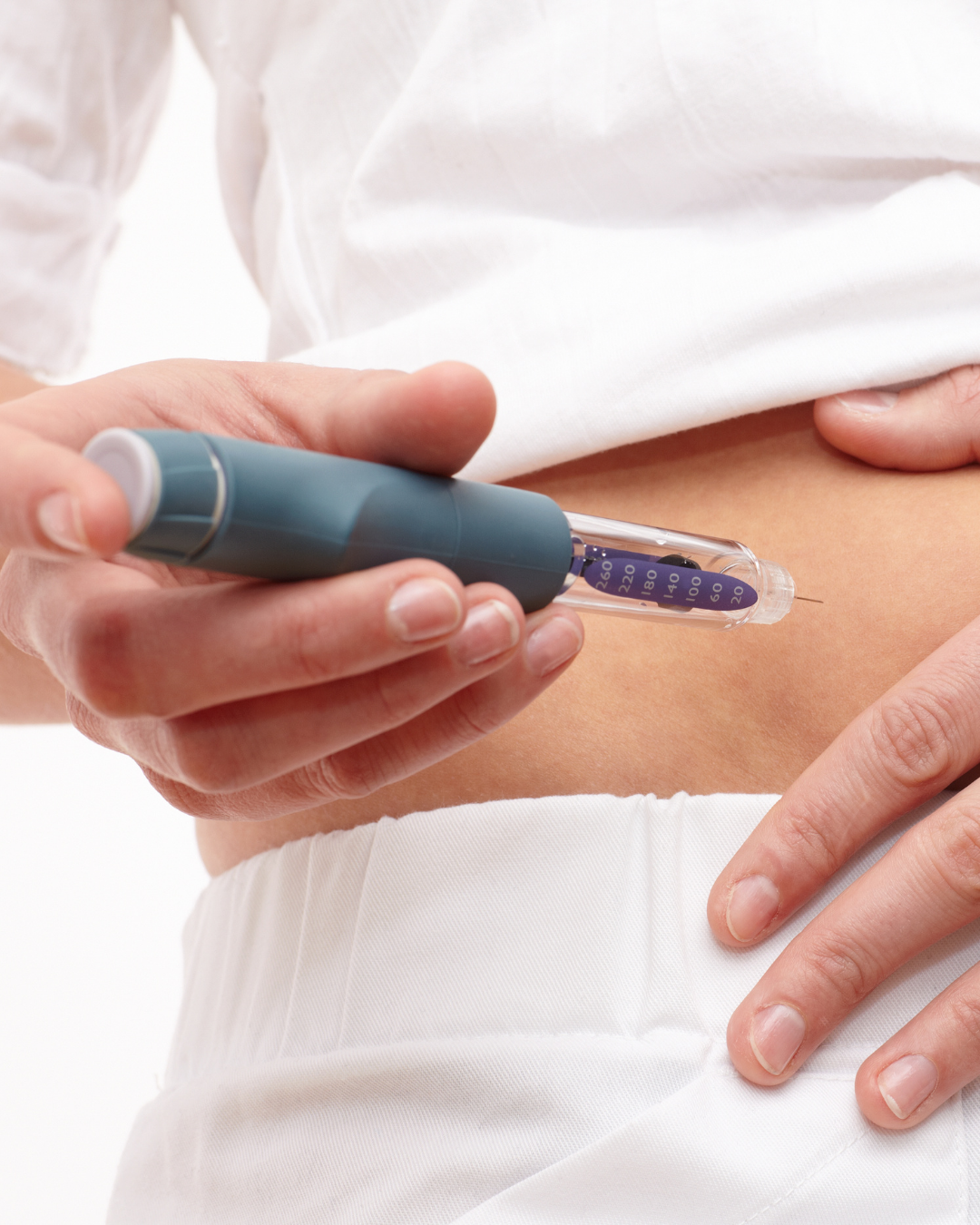
Important: This article is for educational purposes only and is not medical advice. Always follow your healthcare provider's instructions for administering your medication.
If you're using a GLP-1 medication like semaglutide (Ozempic, Wegovy) or tirzepatide (Mounjaro, Zepbound), you've probably wondered: does it actually matter where I inject this?
The internet is full of claims. Some people swear the stomach works better. Others insist the thigh gives fewer side effects. Someone's cousin's friend lost more weight injecting in their arm.
So what does the science actually say?
Let's ignore the threads online for a moment and look at what we know (and what we don't).
The Official Line: It Shouldn't Matter
According to the FDA-approved prescribing information for semaglutide, the medication achieves similar exposure whether injected in the abdomen, thigh, or upper arm.
In plain English: your body absorbs roughly the same amount of medication regardless of which approved site you choose.
The European Medicines Agency assessment confirms that both thigh and stomach injections show comparable medication exposure and clinical effectiveness.
So from a regulatory and clinical standpoint, the three approved sites - abdomen, thigh and upper arm - are considered interchangeable.
But There Are Some Small Differences
Here's where it gets interesting.
While the sites are officially equivalent, research has found some minor variations in how the medication is absorbed from different locations.
A population study found that bioavailability was 12% lower when semaglutide was injected in the thigh compared to the abdomen, though researchers noted this difference wasn't considered clinically significant.
To put that in perspective: a 12% difference in absorption doesn't mean 12% less weight loss. The medication still works effectively at all three sites. The variation is small enough that it doesn't change treatment outcomes in clinical trials.
An earlier analysis didn't find a significant difference between injection sites at all, which tells you just how subtle these variations are.
Why Absorption Rates Differ Slightly
The reason for minor differences comes down to basic biology.
Different parts of your body have different amounts of subcutaneous fat (the fatty layer just under your skin where GLP-1s are meant to be injected) and different blood flow patterns.
Generally, the abdomen has the fastest absorption rate, while the thigh tends to be slower, and the upper arm falls somewhere in between.
But here's the key point: GLP-1 medications like semaglutide have a long half-life of about one week. This means the medication stays in your system for days, creating stable blood levels regardless of small variations in how quickly it's initially absorbed.
Think of it like this: whether water drips into a bucket quickly or slowly doesn't matter much if the bucket holds water for a week anyway.
What Actually Affects Your Results
If injection site location has minimal impact on weight loss, what does matter?
Several factors have much bigger effects on your outcomes:
Taking the medication consistently
This is the single biggest factor. Data shows that people on tirzepatide had 66% adherence compared to 48% for semaglutide, and adherence directly impacts results.
Missing doses or stopping treatment early will affect your weight loss far more than which body part you inject into.
Your dose
Clinical trials show clear dose-dependent effects, with higher doses of both semaglutide and tirzepatide leading to greater weight loss.
Working with your healthcare provider to find the right dose for you matters much more than injection location.
Individual response
Bodies are different. Some people report feeling a difference in side effects depending on injection site, even if the research doesn't show major differences in absorption.
Your personal comfort and experience are valid, even if they're not captured in clinical trials.
The medication itself
Head-to-head trials show tirzepatide produces more weight loss than semaglutide, with some participants losing up to 20% of their initial body weight on tirzepatide compared to around 15% with semaglutide.
Which GLP-1 medication you're prescribed makes a much bigger difference than where you inject it.
The Real Reason to Rotate Sites
If injection location doesn't significantly impact weight loss, why do doctors tell you to rotate sites?
The answer isn't about efficacy - it's about safety and comfort.
Preventing tissue damage
Injecting in the exact same spot repeatedly can cause several problems:
Lipohypertrophy: Small, rubbery lumps of fatty tissue that form from repeated injections in the same area
Scar tissue buildup: Makes future injections more uncomfortable and can affect absorption unpredictably
Skin irritation and bruising: Giving tissue time to heal between injections reduces these issues
Even with gentle technique, repeatedly injecting the same spot can irritate fat tissue and create lumps.
Maintaining consistent absorption
While the difference between sites isn't huge, injecting into damaged or scarred tissue definitely can affect absorption. Rotating sites helps ensure you're always injecting into healthy tissue.
What the Research Tells Us About Technique
Here's what actually matters for proper injection:
Hit the fat, not the muscle
GLP-1 medications are designed to be injected subcutaneously (under the skin, into the fatty layer). If you accidentally inject into muscle, the medication can absorb too quickly, potentially increasing side effects like nausea or making the medication less effective over time.
For most people, this means injecting at a 90 degree angle. If you're particularly lean in an area, a 45-degree angle may be better to ensure you're hitting fat tissue.
Exercise can affect absorption
Vigorous exercise that uses the muscles near your injection site may increase how quickly the medication absorbs.
This doesn't mean you can't exercise after injecting - it's just something to be aware of. If you notice stronger side effects after leg day when you've injected in your thigh, this might be why.
Room temperature matters more than you think
Many people report that letting the medication warm to room temperature for about 30 minutes before injecting reduces discomfort. Cold medication straight from the fridge can sting more going in, regardless of where you inject it.
Common Sites: The Practical Breakdown
Let's look at each approved injection site from a practical standpoint.
Abdomen (Stomach Area)
Why people like it: Easy to reach, usually has adequate subcutaneous fat, many people find it less painful
Things to know: Inject at least two inches away from your belly button. Rotate around the entire area - not just left and right, but all around your stomach within the safe zone
Watch out for: If you carry less fat in your stomach, you may need to pinch the skin and inject at an angle
Thigh
Why people like it: Easy to see what you're doing, good option if your stomach feels tender
Things to know: Inject into the front or outer thigh, avoiding the inner thigh where there are more blood vessels. Absorption may be slightly slower here compared to the abdomen
Watch out for: Some people find walking or exercise uncomfortable if they've just injected in their thigh
Upper Arm
Why people like it: Out of sight, some people report minimal sensation here
Things to know: Inject into the back of the upper arm (tricep area). This is harder to self-administer correctly, so many healthcare providers recommend sticking with the thigh or stomach unless you have help
Watch out for: You may need to use a mirror or have someone help you with proper placement
The Verdict: Does It Matter for Weight Loss?
Based on the current evidence: not really.
The research is clear that injection site has minimal impact on how much weight you lose. The medication works whether you inject in your stomach, thigh, or arm.
What matters much more:
Taking your medication consistently every week
Working up to an effective dose with your healthcare provider
Giving each injection site time to rest before using it again
Using proper technique to ensure you're injecting into fat tissue
Managing side effects so you can stay on the medication long-term
What About Personal Preference?
Here's the thing the studies don't capture: your individual experience matters.
If you genuinely feel better injecting in your thigh than your stomach, or you notice fewer side effects with one site over another, that's useful information - even if it's not showing up in clinical trials.
Some people find certain sites less sensitive or painful than others, and some notice a difference in side effects depending on the site they choose.
The best injection site is the one you'll actually use consistently, that you can access comfortably, and that doesn't cause you excessive discomfort or anxiety.
When Location Might Actually Matter
There are a few situations where injection site could be more important:
If you're very lean: You may have more subcutaneous fat in some areas than others, making certain sites more practical
If you have scar tissue or skin conditions: Obviously avoid these areas and use the healthiest skin available
If you're experiencing persistent side effects: While not well studied, some people report that changing injection sites affects their side effect profile. It's worth experimenting under your provider's guidance
If you're having trouble with absorption: Injecting into the same damaged tissue repeatedly can affect how well the medication is absorbed
The Bottom Line
The internet loves a hack. People want to believe there's a secret injection site that will supercharge their weight loss.
The reality is simpler and maybe a bit disappointing: it doesn't really matter where you inject your GLP-1 medication.
What matters is:
Injecting it correctly into subcutaneous fat
Rotating sites to prevent tissue damage
Being consistent with your doses
Working with your healthcare provider to optimize your treatment
The "best" injection site is the one that's comfortable for you, that you can access easily, and that you'll actually use every week without fail.
Because the biggest factor in your weight loss journey isn't which square inch of skin you choose - it's whether you stick with the treatment long enough for it to work.
A Final Note on Realistic Expectations
Whether you inject in your stomach, thigh, or arm, remember that clinical trials show weight loss typically ranges from about 15-16% of initial body weight with semaglutide and 15-20% with tirzepatide over 12-18 months.
Individual results vary, and these are averages. Some people lose more, some less.
No injection site is going to dramatically change where you fall in that range. Your genetics, lifestyle, starting weight, dose, and how well you tolerate the medication will have far more influence than whether you prefer your left thigh or right side of your stomach.
Focus on what you can control: consistency, proper technique, and open communication with your healthcare team about what's working and what isn't.
The rest is just noise.
References
Comparative Efficacy Studies
Jastreboff AM, et al. (2024). Tirzepatide as compared with semaglutide for the treatment of obesity. New England Journal of Medicine, 391, 2159-2170. https://www.nejm.org/doi/full/10.1056/NEJMoa2416394
Garvey WT, et al. (2022). Tirzepatide versus semaglutide once weekly in patients with type 2 diabetes. New England Journal of Medicine, 385, 503-515. https://www.nejm.org/doi/full/10.1056/NEJMoa2107519
Jastreboff AM, et al. (2024). Semaglutide vs tirzepatide for weight loss in adults with overweight or obesity. JAMA Internal Medicine, 184(9), 1058-1067. https://jamanetwork.com/journals/jamainternalmedicine/fullarticle/2821080
Samson SL, et al. (2024). Real-world effectiveness of tirzepatide versus semaglutide on HbA1c and weight in patients with type 2 diabetes. Diabetes Therapy, 16(1), 167-183. https://pmc.ncbi.nlm.nih.gov/articles/PMC12579026/
Epic Research. (2024). Tirzepatide and injectable semaglutide correlated with greatest weight loss among GLP-1 medications. https://epicresearch.org/articles/tirzepatide-and-injectable-semaglutide-correlated-with-greatest-weight-loss-among-glp-1-medications
Injection Site and Pharmacokinetics Research
Overgaard RV, et al. (2019). Population pharmacokinetics of semaglutide for type 2 diabetes. Diabetes Therapy, 10, 649-662. https://link.springer.com/article/10.1007/s13300-019-0581-y
U.S. Food and Drug Administration. (2017). Ozempic (semaglutide) injection prescribing information. https://www.accessdata.fda.gov/drugsatfda_docs/label/2017/209637lbl.pdf
U.S. Food and Drug Administration. (2025). Ozempic (semaglutide) injection prescribing information (updated). https://www.accessdata.fda.gov/drugsatfda_docs/label/2025/209637s025lbl.pdf
Overgaard RV, et al. (2021). Clinical pharmacokinetics of oral semaglutide: Analyses of data from clinical pharmacology trials. Clinical Pharmacokinetics, 60(10), 1335-1348. https://pubmed.ncbi.nlm.nih.gov/33969456/
Lau J, et al. (2022). Clinical pharmacokinetics of semaglutide: A systematic review. European Journal of Drug Metabolism and Pharmacokinetics, 47(4), 451-471. https://pmc.ncbi.nlm.nih.gov/articles/PMC11215664/
Clinical Guidance and Administration
GoodRx. (2025). Where to inject Ozempic: Stomach, arm, or thigh? https://www.goodrx.com/ozempic/where-to-inject-ozempic
Fella Health. (2025). Wegovy in thigh vs stomach: Choosing your injection site. https://www.fellahealth.co.uk/guide/wegovy-in-thigh-vs-stomach
European Medicines Agency. Summary of Product Characteristics for Wegovy (semaglutide).
Safety and Side Effects
Nauck MA, et al. (2025). Comparative safety and side effects of semaglutide and tirzepatide: Implications for clinical decision-making in obesity management. Biomedicine & Pharmacotherapy, 181, 117754. https://www.sciencedirect.com/science/article/pii/S0753332225009254
General Notes
All sources were accessed and verified in January 2026. Web links were active at the time of compilation. For the most current prescribing information, consult official FDA labels and speak with your healthcare provider.
Conflict of Interest Statement: These articles are for educational purposes only. The author has no financial relationships with pharmaceutical companies or medical device manufacturers.
